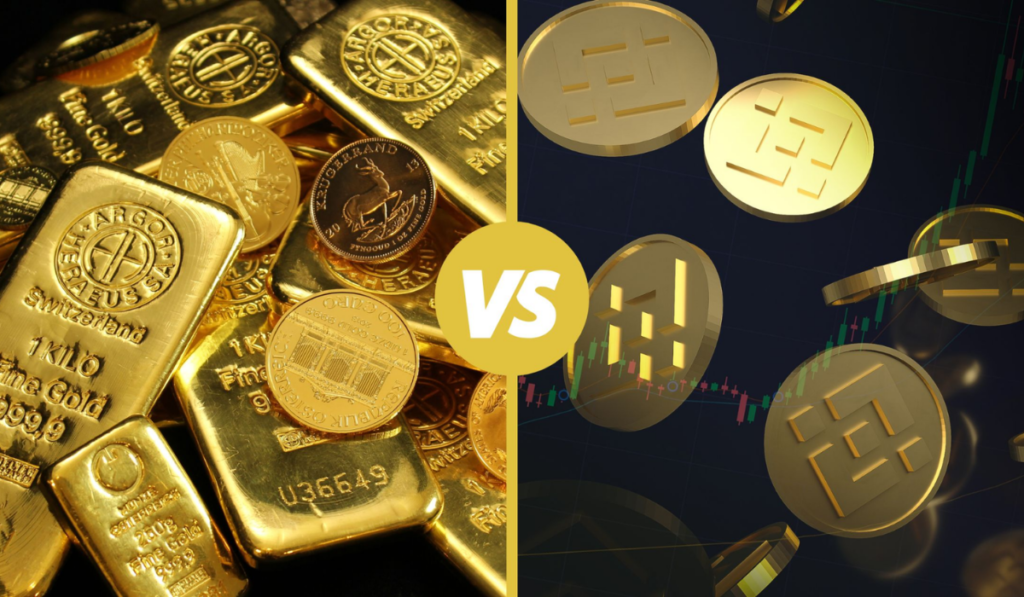
Gold has always been the thing people run to when markets get shaky. But how you actually hold that gold matters. Between a bar sitting in a vault and a token sitting in your crypto wallet, there’s a pretty important decision to make now – and most people haven’t thought this through.
This ties into something bigger too. RWA tokens – blockchain versions of real assets like bonds, equities, and now gold – have gradually become a serious market. Gold-backed tokens are probably the easiest entry point into real-world asset tokenization if you’ve never touched this space before, mostly because gold is something everyone already understands.
For Indian investors specifically, this is also where a platform like Delta Exchange India starts to matter – it’s built around cryptocurrency trading with INR, so getting into RWA tokens doesn’t mean wrestling with conversions or funding headaches first.
Key Takeaways
- Physical gold means you actually hold it – no digital dependency, no counterparty risk if you store it yourself.
- Gold-backed tokens are digital claims on vault-stored gold, usually pegged 1:1 to a troy ounce, tradable on-chain.
- Storing physical gold costs money; tokens usually don’t, since the issuer eats the vaulting cost.
- Tokens trade all day, every day, with near-instant settlement. Physical gold moves at the pace of business hours.
- Tokens are easy to split into small amounts, so you skip the heavy premiums that come with tiny physical coins.
- Physical gold still works with zero electricity or internet. A token can’t say the same.
- Platforms offering cryptocurrency trading with INR, like Delta Exchange India, make it a lot easier for Indian investors to get into this.
What Are Gold-Backed Tokens?
Someone buys real gold, locks it away in a vault, and issues a digital token on the blockchain that represents a claim to that gold – usually one token for one troy ounce. You’re not buying the metal directly. You’re buying a digital receipt for it, one that you can trade, send, or split into tiny pieces whenever you want.
It’s the same logic behind RWA tokens like XAUTUSD more broadly: take something real, wrap it in a blockchain-friendly format, and let people trade it without the usual physical hassle.
What You Get With Physical Gold
There’s something reassuring about owning a bar or coin you can actually touch. It doesn’t need an exchange to stay solvent, a server to stay online, or anyone else’s cooperation. Store it yourself, and there’s no counterparty risk at all.
But that peace of mind isn’t free:
- Safes, insurance, and vault fees pile up quietly over the years.
- Selling isn’t quick – you’re finding a dealer, getting it verified, and waiting for the deal to close.
- Small purchases get expensive fast. A 1-gram coin usually comes with a steep premium over spot price, since dealers charge more for handling tiny amounts.
None of this makes physical gold a bad option. It just means the security comes with some friction attached.
What Changes With Gold-Backed Tokens
Since the issuer handles storage instead of you, a few things shift:
- There’s usually no personal storage cost at all.
- Trading happens round the clock, not just during business hours.
- Settlement is near-instant, instead of taking days.
- You can buy tiny fractions of a token, so smaller budgets get real spot-price exposure without the markup physical coins carry.
- Some tokens can even be plugged into DeFi for a bit of yield – something a bar in a safe can’t do.
But it’s not all upside:
- You’re trusting the issuer to actually hold the gold it claims to, and to handle redemptions properly.
- Smart contract risk is real, along with the usual digital hygiene stuff – wallet security, phishing, etc.
- If the internet or the underlying blockchain ever goes down hard, the token becomes useless until it’s back up. Gold in your hand doesn’t have that problem.
So Which One’s Actually Better?
If I’m being honest, it largely depends on what you’re trying to protect against.
Want something that works no matter what happens to the internet, the grid, or any company involved? Physical gold wins that one easily. Want speed, flexibility, and the ability to buy or sell at 2 AM without leaving your couch? That’s what gold-backed tokens are built for.
A lot of people who’ve been at this a while don’t even pick one – they hold some physical gold as a long-term, offline hedge, and keep some tokenized exposure around for quick moves and smaller trades.
If you’re leaning toward the tokenized side, starting on Delta Exchange India makes the process a lot less confusing, since it lays out clearly whether you’re buying something spot-traded or something structured differently.
The Bottomline
Whichever way you lean, the platform matters more than people expect. Look for one that’s upfront about:
- Whether a token is spot-traded, held in custody, or structured as a derivative.
- Its actual compliance and security track record.
- How smooth INR access really is.
If you’re exploring RWA tokens from India, Delta Exchange India is worth a look – it’s built around exactly this kind of clarity, with transparent compliance and full INR support, which cuts out a lot of the usual friction that comes with getting into a newer asset class.
FAQs
Are gold-backed tokens as safe as physical gold?
Both roughly follow gold’s spot price, but the risks aren’t the same kind. Physical gold has to deal with theft and security. Tokens skip that but bring in custodial trust and smart contract risk instead.
Can I swap a token for real gold?
Sometimes, but usually only at large volumes, often the size of a standard 400-ounce bar. Most everyday holders just sell the token for cash and buy physical gold separately if that’s what they really want.
Are premiums lower with tokens than with physical gold?
Usually, yes. Small physical purchases carry noticeable dealer premiums, while tokens trade much closer to raw spot price – better value for smaller amounts.
Does real-world asset tokenization stop at gold?
Not at all. Gold’s just one category. RWA tokens also cover Treasury bonds, equities, and other assets on-chain.